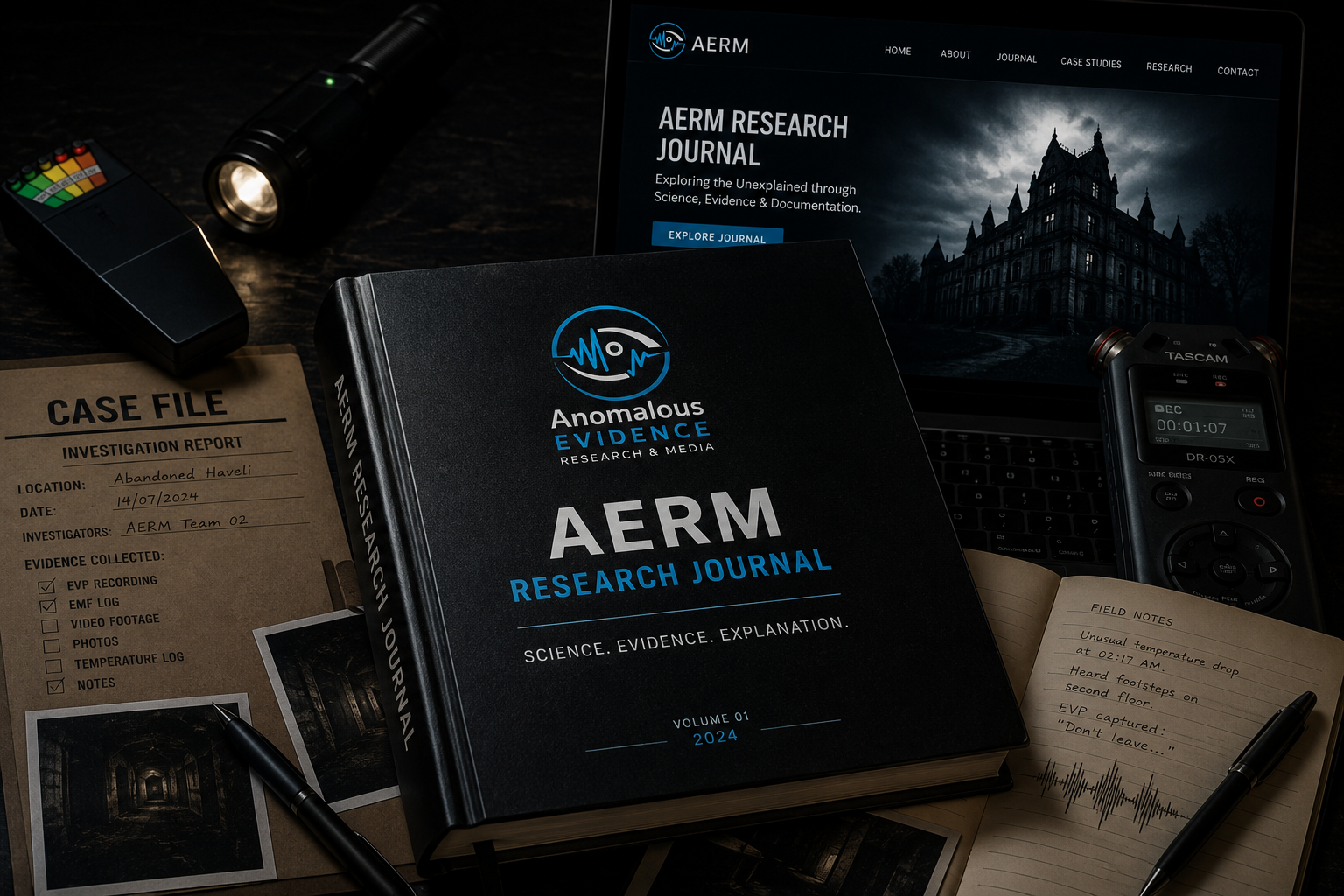
Why AERM Chooses Evidence Over Sensation
Paranormal subjects attract powerful stories. A dark corridor, a strange recording or a witness account can capture attention immediately. But attention is not the same as evidence, and a compelling narrative should not determine the conclusion before the investigation begins.
AERM's editorial position is built around a simple commitment: unusual claims deserve careful examination, and people describing unusual experiences deserve to be treated respectfully. Neither sensational certainty nor automatic dismissal serves that goal.
The distinction between experience and explanation is central. A person may genuinely hear a voice-like sound. The recording may genuinely contain a transient. The cause may remain uncertain. These statements can all be true at once. The mistake occurs when an interpretation is presented as though it were a direct measurement.
Evidence before narrative. Our reports should identify what was observed, how it was recorded, what alternative explanations were tested and what limitations remain. We should publish negative or inconclusive results when they are relevant. We should correct errors openly.
Respect without endorsement. Respecting a witness does not require accepting every explanation. It requires listening without ridicule, avoiding leading questions and protecting privacy. AERM will not use distress, grief or fear as entertainment.
Technology is not authority. A device display, AI classification or dramatic sound effect cannot replace validation. Instruments measure specific quantities. Their limits must be explained to readers.
A commitment to uncertainty. “Unexplained” is a legitimate research status. It is not a synonym for “paranormal.” Further testing may clarify an event, reveal a conventional source or leave the question open. The evidence—not the desired storyline—must guide the conclusion.
AERM Core Principle: No anomaly is considered paranormal until environmental, psychological, technical, and scientific explanations have been systematically evaluated.
AERM aims to make research accessible through practical demonstrations, careful documentation and transparent communication. We invite readers to question methods, examine sources and reproduce tests where possible.
Conclusion. Curiosity is the beginning of investigation. Evidence is what disciplines it. AERM chooses the slower, more demanding path because public trust is more valuable than a sensational headline.
References and Further Reading
- National Academies. Communicating Science Effectively: A Research Agenda.
- Society of Professional Journalists. SPJ Code of Ethics.
- UK Research Integrity Office, principles of good research conduct.
AERM Research and Reporting Checklist
Before publication, confirm that the report:
- States the question and the observation separately from any interpretation.
- Identifies the location and conditions at a level that respects privacy and safety.
- Records equipment, settings, placement and known limitations.
- Preserves original files and documents any processing.
- Describes controls, alternative explanations and unsuccessful tests.
- Reports uncertainty and avoids claims stronger than the evidence.
- Has permission for all identifiable recordings, quotations and images.
AERM Core Principle: No anomaly is considered paranormal until environmental, psychological, technical, and scientific explanations have been systematically evaluated.
About AERM
Anomalous Evidence Research & Media (AERM) is a research and media initiative focused on structured investigation, evidence preservation and public science communication. Through its research publication work and the Paranormal Frame platform, AERM aims to make complex scientific ideas accessible while maintaining a clear distinction between observation, interpretation and established evidence.
Educational Disclaimer
This article is intended for education and research awareness. It is not a substitute for professional medical, engineering, electrical, legal, forensic or safety advice. Obtain appropriate permissions, follow applicable laws and standards, protect participant privacy, and consult qualified professionals whenever a task involves specialist risk.