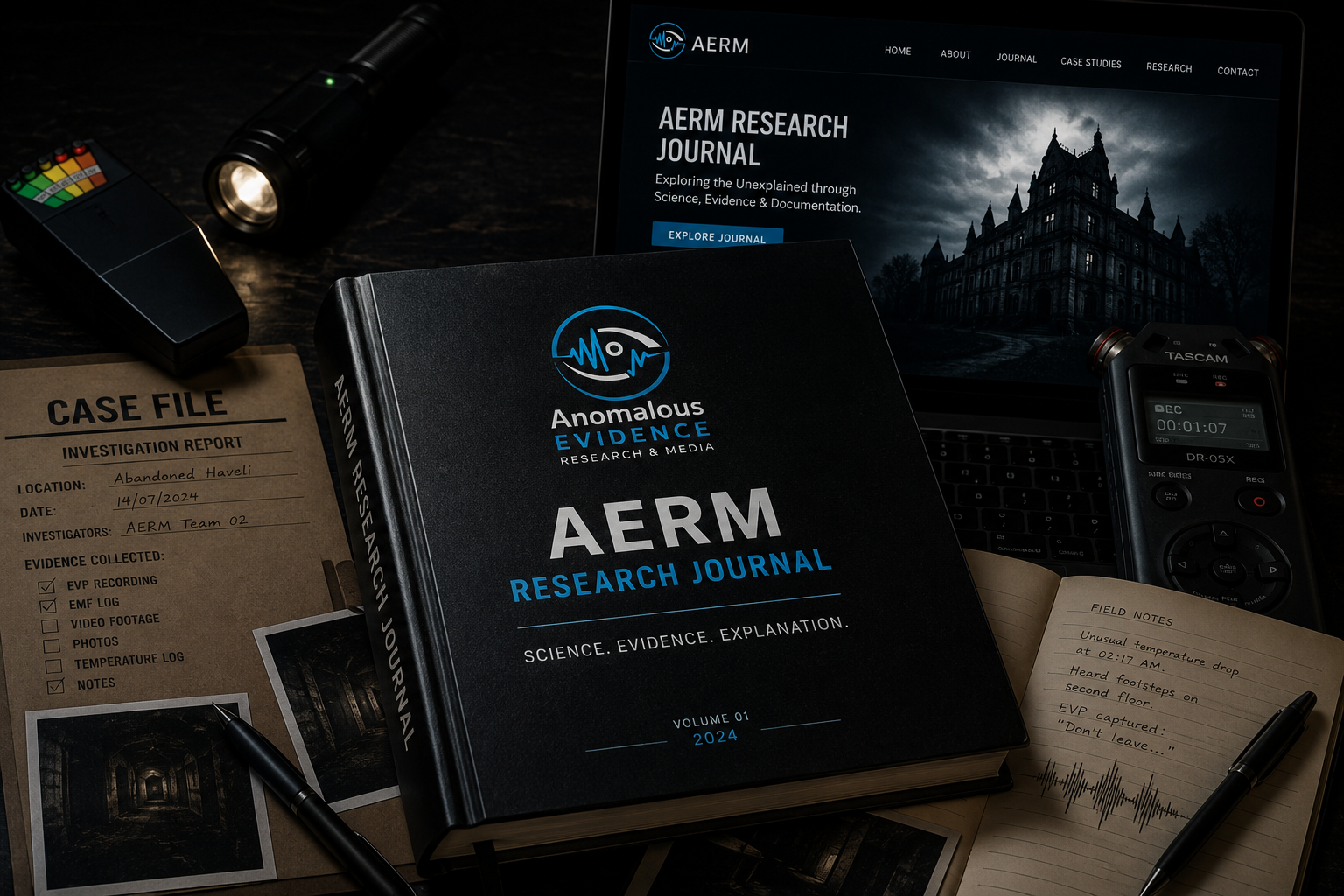
Workshop: Create an Audio Evidence Log and Analyse a Recording Without Altering the Original
This workshop teaches a basic audio-evidence workflow. Participants will preserve an original recording, create a verified working copy, inspect its technical properties and produce a short analysis note. The exercise uses ordinary environmental audio and does not require participants to interpret ambiguous sounds as voices.
Learning objectives. Understand file integrity, sample rate, bit depth, waveform display, spectrograms and the difference between observation and interpretation.
Materials. A recorder or sample WAV file, computer, headphones, audio-analysis software, a spreadsheet or evidence-log template and a file-hashing utility. Use a recording made with consent and avoid private conversations.
Step 1: preserve. Copy the source file into a clearly named evidence folder. Do not trim or normalise it. Record its original file name, size, source, collection time and device. Calculate a SHA-256 hash.
Step 2: create a working copy. Duplicate the file and verify the copy's hash. Open only the working copy for analysis. Record the software name and version.
Step 3: inspect. Note duration, sample rate, channel count and peak level. View the waveform and spectrogram. Mark objective events such as a transient, clipping or a sustained tone. Do not label a sound as a word until independent listening supports that description.
Step 4: listen independently. Ask participants to listen without being told what they are expected to hear. Collect written descriptions before discussion. Compare the range of interpretations.
Step 5: report. Write a short note separating direct observations, processing steps and interpretations. Include the original hash and the working-copy hash. If enhancement is attempted, save it as a separate derivative and document every setting.
Assessment. A successful submission includes an intact source file, hash record, technical metadata, marked waveform or spectrogram, independent listening notes and a limitations paragraph.
Conclusion. Audio analysis is strongest when the original remains untouched and every transformation is visible. The workshop develops a repeatable habit that can be applied to any field recording.
References and Further Reading
- NIST FIPS 180-4. Secure Hash Standard.
- EBU Tech 3285. Broadcast Wave Format.
- AES, educational resources on digital audio and audio preservation.
AERM Research and Reporting Checklist
Before publication, confirm that the report:
- States the question and the observation separately from any interpretation.
- Identifies the location and conditions at a level that respects privacy and safety.
- Records equipment, settings, placement and known limitations.
- Preserves original files and documents any processing.
- Describes controls, alternative explanations and unsuccessful tests.
- Reports uncertainty and avoids claims stronger than the evidence.
- Has permission for all identifiable recordings, quotations and images.
AERM Core Principle: No anomaly is considered paranormal until environmental, psychological, technical, and scientific explanations have been systematically evaluated.
About AERM
Anomalous Evidence Research & Media (AERM) is a research and media initiative focused on structured investigation, evidence preservation and public science communication. Through its research publication work and the Paranormal Frame platform, AERM aims to make complex scientific ideas accessible while maintaining a clear distinction between observation, interpretation and established evidence.
Educational Disclaimer
This article is intended for education and research awareness. It is not a substitute for professional medical, engineering, electrical, legal, forensic or safety advice. Obtain appropriate permissions, follow applicable laws and standards, protect participant privacy, and consult qualified professionals whenever a task involves specialist risk.