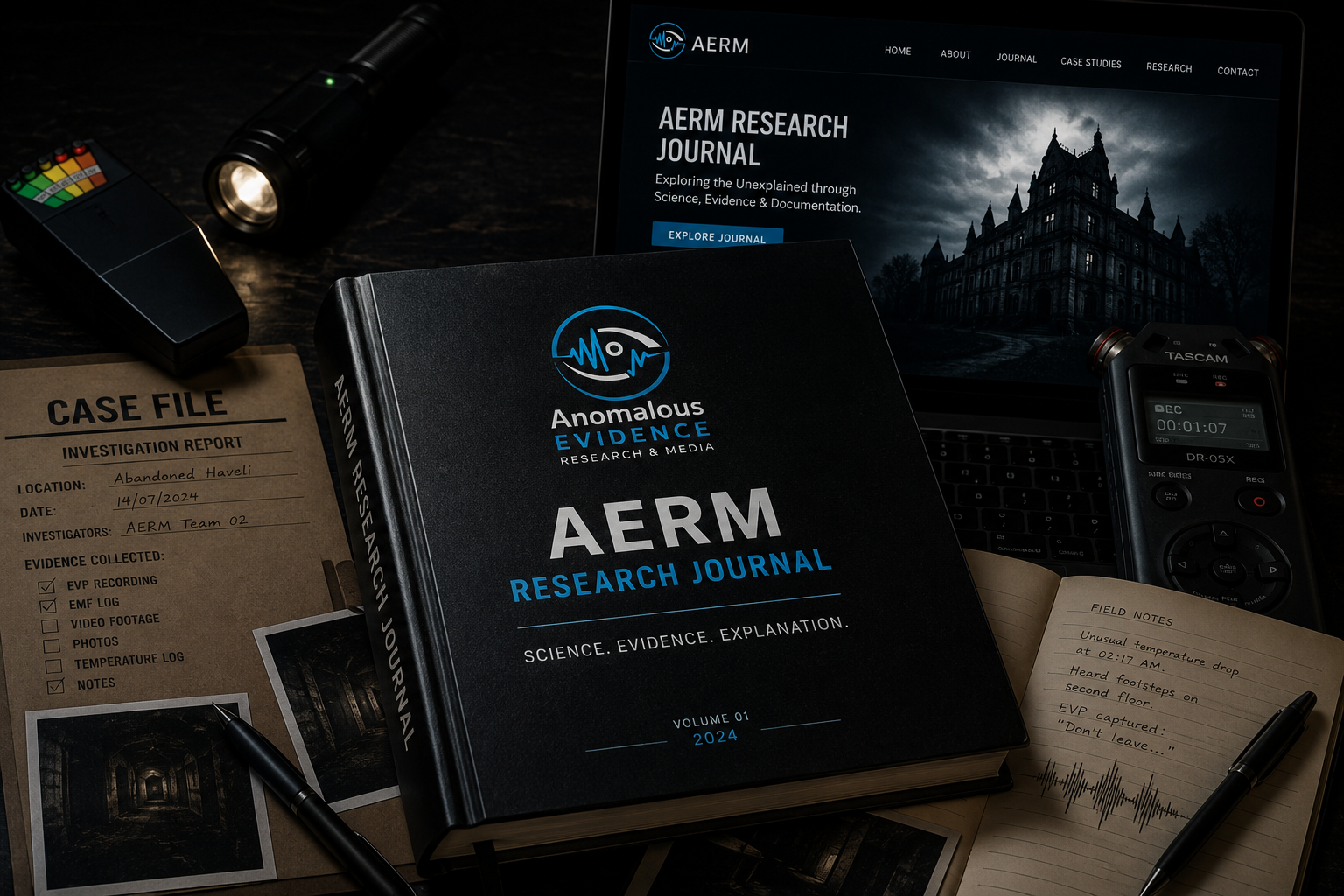
How to Review an EMF Meter Without Falling for Its Marketing
An EMF meter review should answer a simple question: what physical quantity does this instrument measure, over what range and with what uncertainty? Labels such as “ghost detector” or “spirit sensor” are marketing language, not technical specifications.
First identify the measurement. Some instruments measure low-frequency magnetic fields; others detect electric fields or radio-frequency energy. A combined consumer device may use several sensors with different ranges. These are not interchangeable. A reading in milligauss, microtesla, volts per metre or milliwatts per square metre describes different quantities.
Review criteria. Record frequency response, measurement range, resolution, accuracy specification, sampling or update rate, sensor orientation, alarm behaviour, calibration options and environmental operating limits. Check whether the device provides raw numerical data or only coloured lights and sound alerts.
Bench evaluation. Compare the meter with a suitable reference instrument in a controlled environment. Test repeatability at fixed positions and orientations. Introduce known sources only where safe and within the instrument's rating. Record how the device responds to distance and orientation. Do not expose equipment or people to hazardous electrical conditions.
Field usability. Assess battery life, display readability, logging capability, build quality, manual clarity and whether the alarm can be disabled. Note whether the meter is easily triggered by phones, chargers, lighting drivers or nearby transmitters.
A review score should not hide uncertainty. A device can be well-built yet unsuitable for a specific measurement. State what was tested, what was not tested and whether the review sample was supplied by a manufacturer. Avoid implying that a high reading indicates a paranormal presence.
Suggested review format. Product identity; intended measurement; manufacturer specifications; test setup; repeatability results; known limitations; safety considerations; value for the stated research use; final suitability rating. Keep “suitability for environmental measurement” separate from “ability to detect paranormal activity”—the latter has no validated consumer-meter benchmark.
Conclusion. A credible equipment review evaluates the instrument as a measuring device. It does not endorse the supernatural claims used to sell it.
References and Further Reading
- IEC 61786-1. Measurement of DC magnetic, AC magnetic and AC electric fields from 1 Hz to 100 kHz.
- IEEE electromagnetic compatibility resources.
- NIST measurement science resources.
AERM Research and Reporting Checklist
Before publication, confirm that the report:
- States the question and the observation separately from any interpretation.
- Identifies the location and conditions at a level that respects privacy and safety.
- Records equipment, settings, placement and known limitations.
- Preserves original files and documents any processing.
- Describes controls, alternative explanations and unsuccessful tests.
- Reports uncertainty and avoids claims stronger than the evidence.
- Has permission for all identifiable recordings, quotations and images.
AERM Core Principle: No anomaly is considered paranormal until environmental, psychological, technical, and scientific explanations have been systematically evaluated.
About AERM
Anomalous Evidence Research & Media (AERM) is a research and media initiative focused on structured investigation, evidence preservation and public science communication. Through its research publication work and the Paranormal Frame platform, AERM aims to make complex scientific ideas accessible while maintaining a clear distinction between observation, interpretation and established evidence.
Educational Disclaimer
This article is intended for education and research awareness. It is not a substitute for professional medical, engineering, electrical, legal, forensic or safety advice. Obtain appropriate permissions, follow applicable laws and standards, protect participant privacy, and consult qualified professionals whenever a task involves specialist risk.