Memory Reconstruction: Why Witness Accounts Change After an Unusual Event
A witness may sincerely remember an event while the details of that memory change over time. Human memory is reconstructive: people retrieve fragments and rebuild an account using perception, knowledge, later information and current expectations. This does not mean witnesses are dishonest. It means memory should be documented carefully.
Encoding and retrieval. Attention is selective. In a frightening or confusing moment, a person may focus on one feature while missing others. Later, memory retrieval can be influenced by questions, conversations, photographs, media stories and repeated retelling.
Post-event information. Leading questions can introduce details that were not part of the original experience. Asking “How tall was the figure?” assumes a figure was present. Asking “What, if anything, did you notice?” allows a broader response. Group discussion before independent accounts can also cause witnesses to converge.
A neutral interview method. Invite a free narrative first. Avoid interrupting. Then ask open questions about sequence, distance, lighting, duration, sounds and uncertainty. Distinguish what the person directly perceived from what they inferred later. Record the interview with consent and preserve the original account.
Independent statements. Where several people were present, interview them separately before sharing accounts. Record the time of each interview and whether witnesses had discussed the event. Agreement is more informative when it is independent; similar stories formed after group discussion may not be independent corroboration.
AERM field practice. Use neutral wording, avoid confirming supernatural interpretations, allow “I don't know,” and do not pressure witnesses to provide details. Keep original statements separate from later clarifications. If an account changes, document the change rather than silently replacing the earlier version.
Limits. Memory research does not prove that a specific witness is mistaken. It identifies conditions that can influence recall and suggests methods to reduce contamination. Physical recordings and environmental measurements may supplement testimony, but they too have limitations.
Conclusion. Respectful witness work requires both empathy and methodological care. The aim is not to challenge a person's sincerity; it is to preserve what they remember while keeping later interpretation separate.
References and Further Reading
- Loftus, E. F. “Planting misinformation in the human mind: A 30-year investigation of the malleability of memory.” Learning & Memory.
- National Research Council. Identifying the Culprit: Assessing Eyewitness Identification.
- Fisher, R. P. and Geiselman, R. E. Memory-Enhancing Techniques for Investigative Interviewing.
AERM Research and Reporting Checklist
Before publication, confirm that the report:
- States the question and the observation separately from any interpretation.
- Identifies the location and conditions at a level that respects privacy and safety.
- Records equipment, settings, placement and known limitations.
- Preserves original files and documents any processing.
- Describes controls, alternative explanations and unsuccessful tests.
- Reports uncertainty and avoids claims stronger than the evidence.
- Has permission for all identifiable recordings, quotations and images.
AERM Core Principle: No anomaly is considered paranormal until environmental, psychological, technical, and scientific explanations have been systematically evaluated.
About AERM
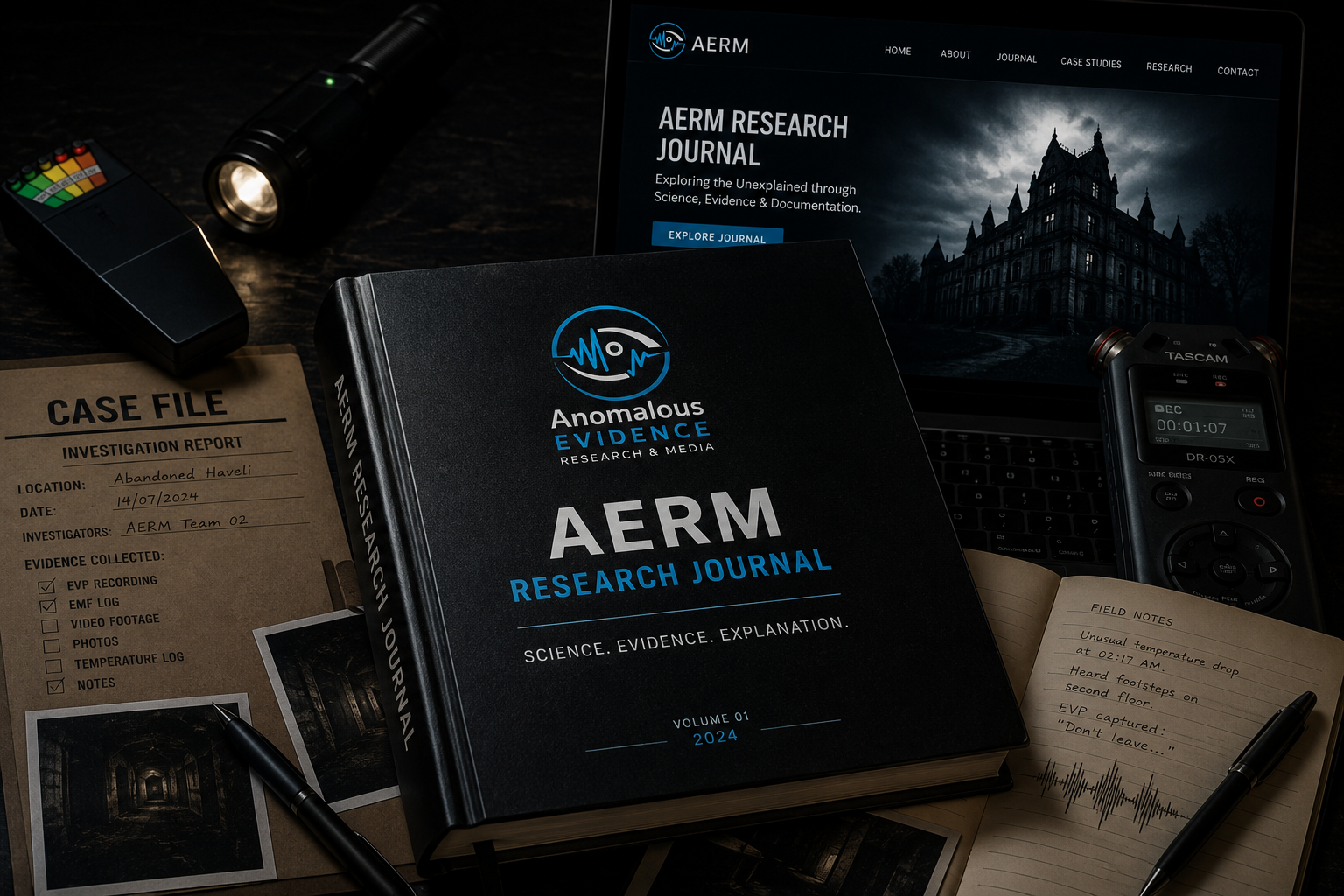
Anomalous Evidence Research & Media (AERM) is a research and media initiative focused on structured investigation, evidence preservation and public science communication. Through its research publication work and the Paranormal Frame platform, AERM aims to make complex scientific ideas accessible while maintaining a clear distinction between observation, interpretation and established evidence.
Educational Disclaimer
This article is intended for education and research awareness. It is not a substitute for professional medical, engineering, electrical, legal, forensic or safety advice. Obtain appropriate permissions, follow applicable laws and standards, protect participant privacy, and consult qualified professionals whenever a task involves specialist risk.