Publishing Unexplained Experiences Responsibly: Avoiding Sensationalism and Harm
A research article, documentary or social-media post can shape how audiences understand a witness, a location and an unexplained event. Sensational editing may attract attention, but it can also misrepresent uncertainty, damage reputations and encourage unsafe behaviour.
Separate evidence from narrative. Label direct observations, witness recollections, instrument readings and interpretations separately. Do not present a dramatic reconstruction as original footage. If a clip has been shortened, enhanced or colour-graded, disclose that fact.
Avoid certainty inflation. Words such as “proof,” “confirmed” and “undeniable” should be reserved for conclusions that the evidence actually supports. “Unexplained in this review” is more accurate than “paranormal confirmed.” A lack of an immediate explanation is not proof of an extraordinary cause.
Protect people and places. Remove identifying details when publication could expose a witness to harassment or reveal a vulnerable site. Do not publish access routes to dangerous abandoned buildings. Obtain permission for images, recordings and quotations.
Context matters. Include ordinary explanations tested, limitations, failed tests and relevant counterevidence. If a witness disputes the account, document the disagreement fairly. Avoid thumbnails or headlines that imply a conclusion not supported by the article.
Editorial checklist. Verify dates and sources; preserve original media; distinguish reconstruction from evidence; obtain consent; check factual claims; include uncertainty; avoid defamatory speculation; and provide a correction route.
Conclusion. Responsible communication does not make a story dull. It gives the audience enough information to judge the evidence independently. Credibility is built by showing what is known, what is uncertain and what remains to be tested.
References and Further Reading
- Society of Professional Journalists. SPJ Code of Ethics.
- UNESCO, journalism and media ethics resources.
- National Academies. Communicating Science Effectively.
AERM Research and Reporting Checklist
Before publication, confirm that the report:
- States the question and the observation separately from any interpretation.
- Identifies the location and conditions at a level that respects privacy and safety.
- Records equipment, settings, placement and known limitations.
- Preserves original files and documents any processing.
- Describes controls, alternative explanations and unsuccessful tests.
- Reports uncertainty and avoids claims stronger than the evidence.
- Has permission for all identifiable recordings, quotations and images.
AERM Core Principle: No anomaly is considered paranormal until environmental, psychological, technical, and scientific explanations have been systematically evaluated.
About AERM
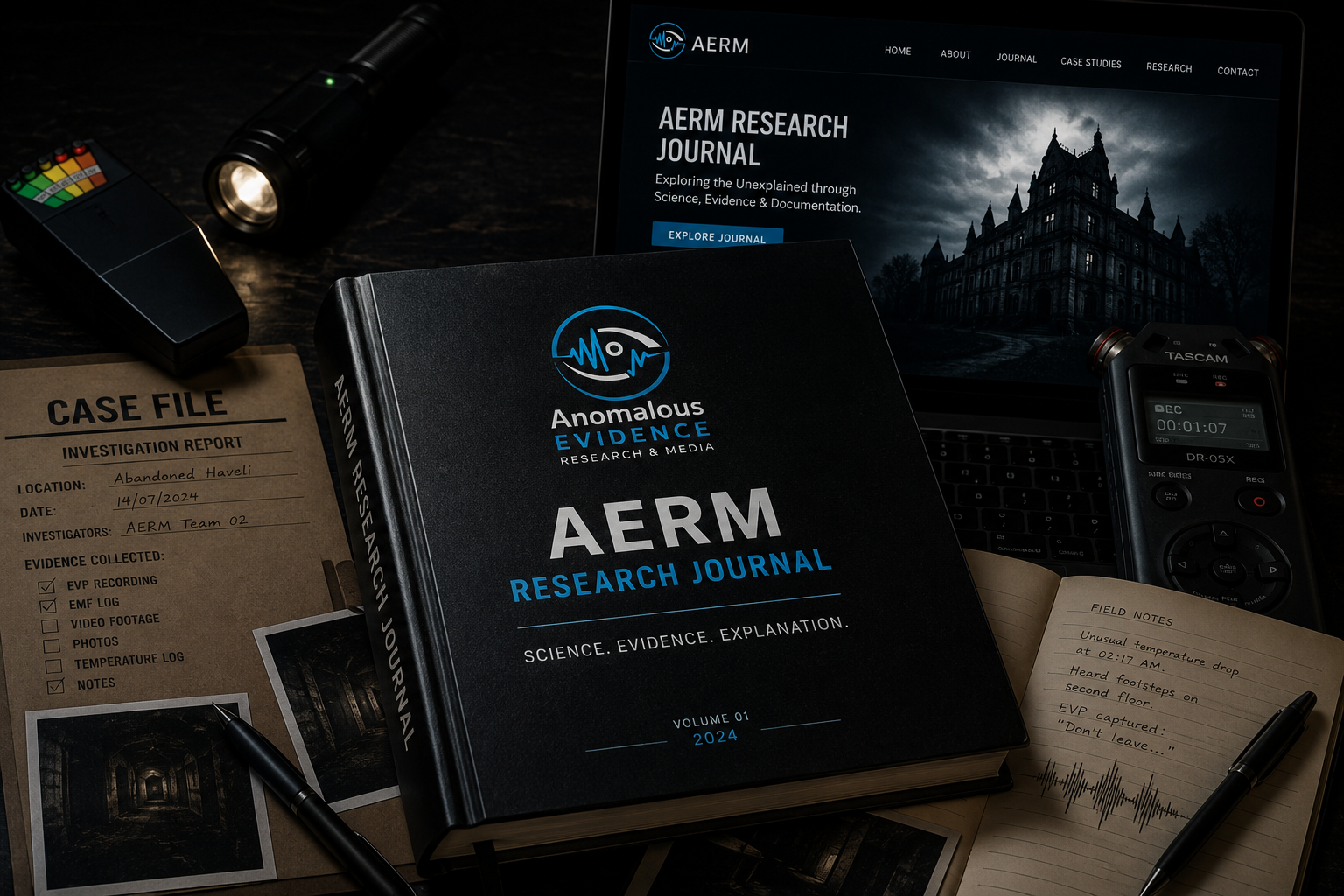
Anomalous Evidence Research & Media (AERM) is a research and media initiative focused on structured investigation, evidence preservation and public science communication. Through its research publication work and the Paranormal Frame platform, AERM aims to make complex scientific ideas accessible while maintaining a clear distinction between observation, interpretation and established evidence.
Educational Disclaimer
This article is intended for education and research awareness. It is not a substitute for professional medical, engineering, electrical, legal, forensic or safety advice. Obtain appropriate permissions, follow applicable laws and standards, protect participant privacy, and consult qualified professionals whenever a task involves specialist risk.