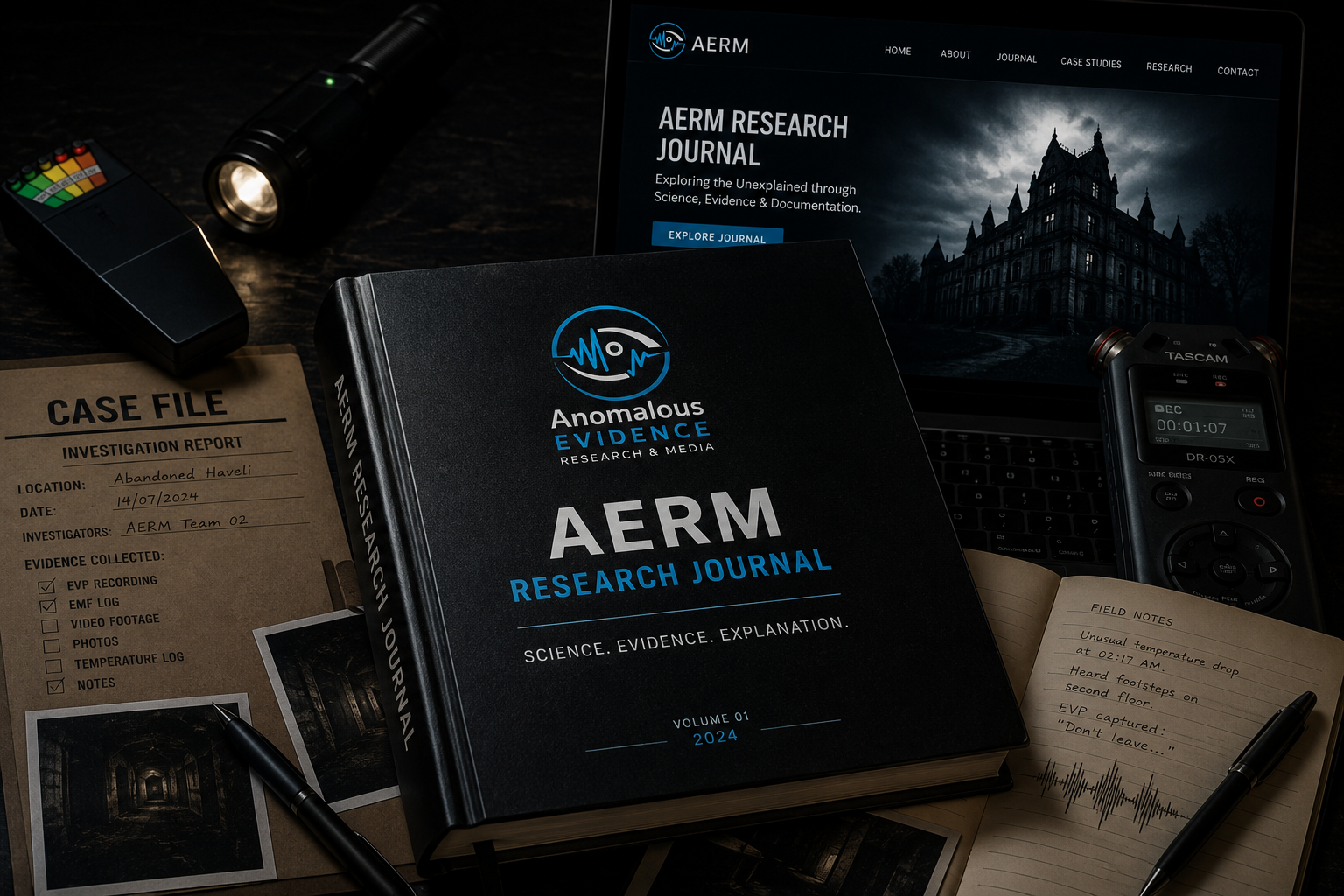
Systematic Investigation Methodology for Unexplained Reports: A Structured Evidence-Based Approach
Every investigation should follow a process. A conclusion is only as reliable as the methodology used to reach it.
Reports of unexplained events often contain incomplete information, emotional experiences, and environmental variables that can influence both witnesses and investigators. Without a structured investigative process, observations may be interpreted inconsistently, reducing the reliability of any conclusions.
At Anomalous Evidence Research & Media (AERM), investigations are approached through a systematic, evidence-based methodology that prioritizes documentation, environmental assessment, critical analysis, and transparency. Rather than seeking confirmation of extraordinary claims, investigators seek to understand what the available evidence can reasonably support.
---
Executive Summary
A structured investigation should:
- Define a clear objective.
- Collect reliable information.
- Document environmental conditions.
- Preserve evidence.
- Evaluate alternative explanations.
- Produce transparent and reproducible reports.
Methodology is the foundation of credible investigation.
---
Why a Structured Method Matters
Every investigation is unique, but consistency in methodology allows findings to be compared across different cases.
A structured process helps investigators:
- Reduce personal bias.
- Improve documentation quality.
- Increase repeatability.
- Maintain evidence integrity.
- Produce objective conclusions.
Without a standardized workflow, two investigators examining the same location may reach entirely different conclusions based solely on interpretation
---
Stage 1 — Case Assessment
Every investigation begins with understanding the report.
Investigators gather information such as:
- Nature of the reported activity
- Date and time of incidents
- Frequency of events
- Number of witnesses
- Location characteristics
- Previous investigations
- Safety considerations
This information defines the scope of the investigation before fieldwork begins.
---
Stage 2 — Site Survey
Before collecting evidence, investigators perform a comprehensive survey of the location.
The survey includes:
- Building layout
- Entry and exit points
- Electrical infrastructure
- Lighting conditions
- Environmental hazards
- Structural condition
- Weather influences
- Nearby sources of noise or vibration
Understanding the physical environment provides essential context for later observations.
---
Stage 3 — Environmental Assessment
Environmental conditions are documented before any interpretation is made.
Measurements commonly include:
- Temperature
- Relative humidity
- Atmospheric pressure
- Light intensity
- Electromagnetic field levels
- Air quality
- Background sound levels
These measurements establish a baseline against which future observations can be compared.
---
Stage 4 — Systematic Documentation
Every observation should be documented accurately and consistently.
Documentation includes:
- Exact timestamps
- Investigator location
- Environmental conditions
- Equipment used
- Photographs
- Video recordings
- Audio recordings
- Field notes
Observations should describe what happened, not what investigators believe happened.
---
Stage 5 — Evidence Collection
Evidence should be collected carefully while preserving its integrity.
Depending on the investigation, this may include:
- Digital photographs
- Video recordings
- Audio recordings
- Environmental measurements
- Physical samples (when appropriate)
- Witness statements
All evidence should remain traceable from collection through final reporting.
---
Stage 6 — Comparative Analysis
Collected information is evaluated using multiple sources of evidence.
Investigators compare:
- Environmental measurements
- Witness accounts
- Photographs
- Video recordings
- Audio recordings
- Historical information
- Structural observations
Consistency across multiple independent sources strengthens confidence in the findings.
---
Stage 7 — Alternative Explanations
Professional investigations require actively searching for conventional explanations before considering unusual interpretations.
Examples include:
- Electrical interference
- Mechanical systems
- Air movement
- Wildlife activity
- Building materials
- Lighting conditions
- Human perception
- Weather effects
Considering alternative explanations improves the reliability of the investigation.
---
Stage 8 — Reporting
A final report should communicate findings clearly and objectively.
Professional reports typically include:
- Investigation objective
- Methodology
- Equipment used
- Environmental conditions
- Observation log
- Evidence summary
- Analysis
- Limitations
- Conclusions
- Recommendations
Reports should distinguish clearly between observations, interpretations, and conclusions.
---
Maintaining Objectivity
Objectivity is one of the most important qualities of a professional investigator.
Investigators should:
- Avoid confirmation bias.
- Document before interpreting.
- Preserve original evidence.
- Welcome independent review.
- Accept uncertainty when evidence is insufficient.
Scientific investigation values accuracy over certainty.
---
Common Challenges
Investigations may be influenced by:
- Environmental variability
- Equipment limitations
- Witness memory
- Restricted site access
- Time constraints
- Changing weather conditions
Recognizing these limitations is essential for responsible reporting.
---
Best Practices
Professional investigators should:
- Follow standardized procedures.
- Record environmental baselines.
- Use calibrated equipment.
- Maintain detailed field notes.
- Preserve evidence integrity.
- Consider multiple explanations.
- Produce transparent reports.
Consistency is essential for credible research.
---
Conclusion
A structured methodology transforms an investigation from a collection of observations into a systematic research process.
While no single method can eliminate every uncertainty, disciplined procedures, objective documentation, and evidence-based analysis significantly improve the quality and credibility of investigative findings.
At AERM, every investigation begins with questions, follows the evidence, and concludes only after careful analysis of all available information.
Methodology builds confidence. Evidence builds conclusions.
---
References
This article is informed by established principles of scientific investigation, environmental assessment, forensic documentation, field research methodology, and evidence management. Readers are encouraged to consult academic literature and professional investigative standards for further study.
---
About AERM
Anomalous Evidence Research & Media (AERM) is an independent research organization dedicated to investigating unexplained reports through scientific methodology, environmental analysis, critical thinking, and transparent documentation.
---
Disclaimer
This publication is intended for educational and research purposes. The methodology described represents general principles of evidence-based field investigation and does not disclose AERM's proprietary internal investigation frameworks, training protocols, or operational procedures.