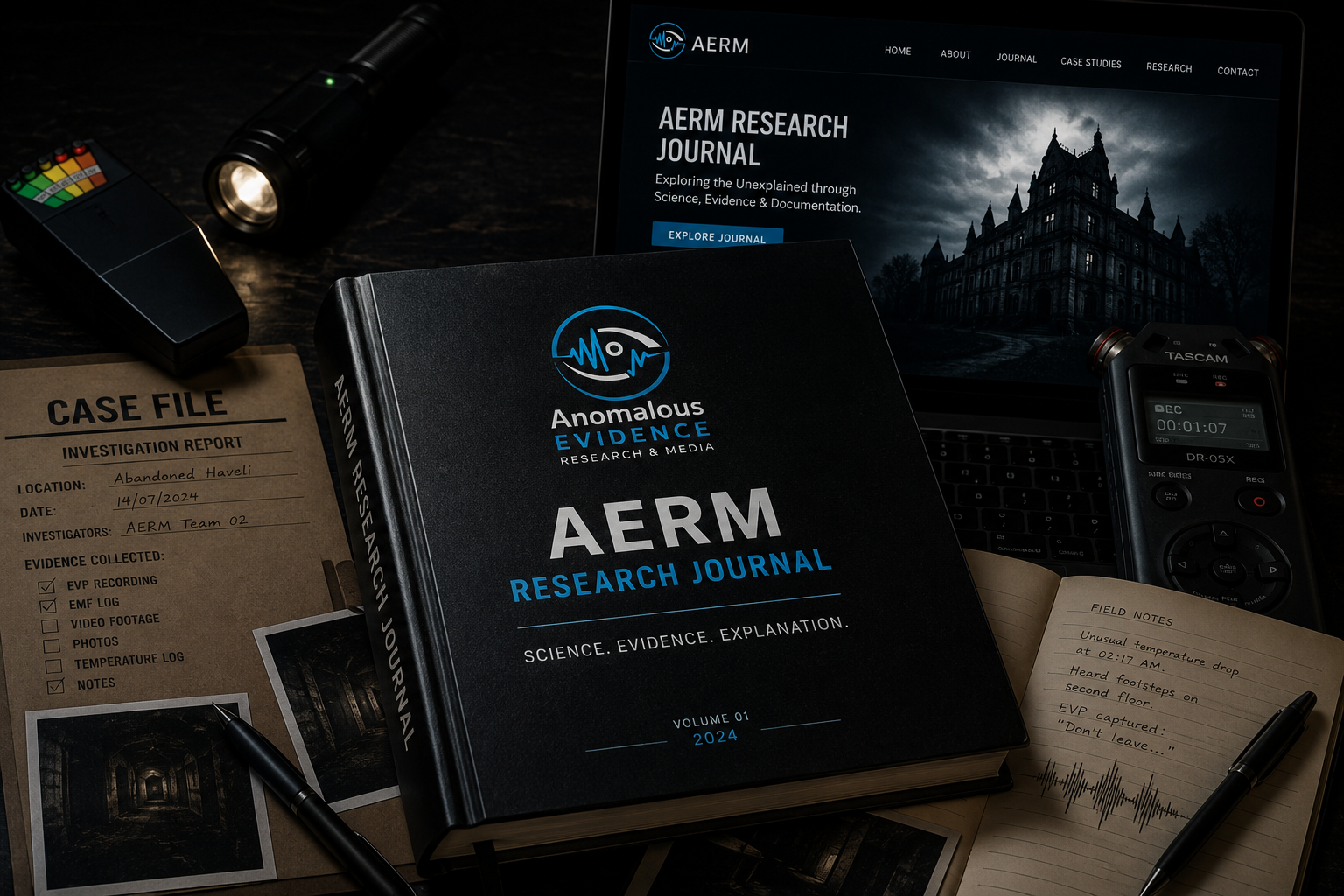
Does a Cold Spot Mean a Presence? Separating Temperature Claims from Thermal Evidence
A sudden sensation of cold is frequently described in paranormal stories as a sign that something has entered a room. Temperature changes are real and measurable, but the interpretation of a cold sensation requires more than a hand held in the air or a single thermometer reading.
Heat moves through conduction, convection and radiation. A draught can cool skin through convection; a cold wall can exchange radiant heat with a person; damp clothing can increase evaporative cooling. A person may therefore feel cold even when the room's air temperature changes very little. Localised airflow from gaps, vents, stairwells or poorly sealed windows can create small zones of discomfort.
A thermometer measures temperature at its sensor, not the entire room. Infrared cameras estimate surface temperature from emitted radiation and depend on emissivity and reflected-temperature settings. A reading from a shiny surface may be misleading. Slow sensors may also miss short-lived changes.
Myth versus fact. Myth: a cold sensation proves a nearby entity. Fact: human thermal sensation depends on air speed, humidity, clothing, radiant temperature and adaptation. Myth: an infrared camera sees cold air. Fact: most thermal cameras map surface radiation; they do not directly image airflow. Myth: one low reading is enough. Fact: a defensible claim needs a baseline, repeat measurements and instrument details.
Field method. Place at least two temperature loggers at fixed, documented positions—one near the reported location and one as a comparison point. Record air temperature, relative humidity and air movement. Note doors, windows, HVAC operation and people entering the room. If using a thermal camera, photograph the visible scene as well, document emissivity settings and verify important surface readings with a contact probe where appropriate. Repeat the measurements under comparable conditions.
Do not deliberately chill participants or expose them to unsafe environments. If a location is cold because of structural damage, poor weather protection or failed heating, address the building-safety issue first.
Conclusion. A cold spot is a useful environmental observation when it is measured properly. It is not a diagnosis of a presence. The responsible question is what changed, where, for how long, and whether the result can be reproduced.
References and Further Reading
- ASHRAE. ASHRAE Handbook—Fundamentals.
- ISO 7726. Ergonomics of the thermal environment—Instruments for measuring physical quantities.
- FLIR. Technical guidance on infrared thermography and emissivity.
AERM Research and Reporting Checklist
Before publication, confirm that the report:
- States the question and the observation separately from any interpretation.
- Identifies the location and conditions at a level that respects privacy and safety.
- Records equipment, settings, placement and known limitations.
- Preserves original files and documents any processing.
- Describes controls, alternative explanations and unsuccessful tests.
- Reports uncertainty and avoids claims stronger than the evidence.
- Has permission for all identifiable recordings, quotations and images.
AERM Core Principle: No anomaly is considered paranormal until environmental, psychological, technical, and scientific explanations have been systematically evaluated.
About AERM
Anomalous Evidence Research & Media (AERM) is a research and media initiative focused on structured investigation, evidence preservation and public science communication. Through its research publication work and the Paranormal Frame platform, AERM aims to make complex scientific ideas accessible while maintaining a clear distinction between observation, interpretation and established evidence.
Educational Disclaimer
This article is intended for education and research awareness. It is not a substitute for professional medical, engineering, electrical, legal, forensic or safety advice. Obtain appropriate permissions, follow applicable laws and standards, protect participant privacy, and consult qualified professionals whenever a task involves specialist risk.