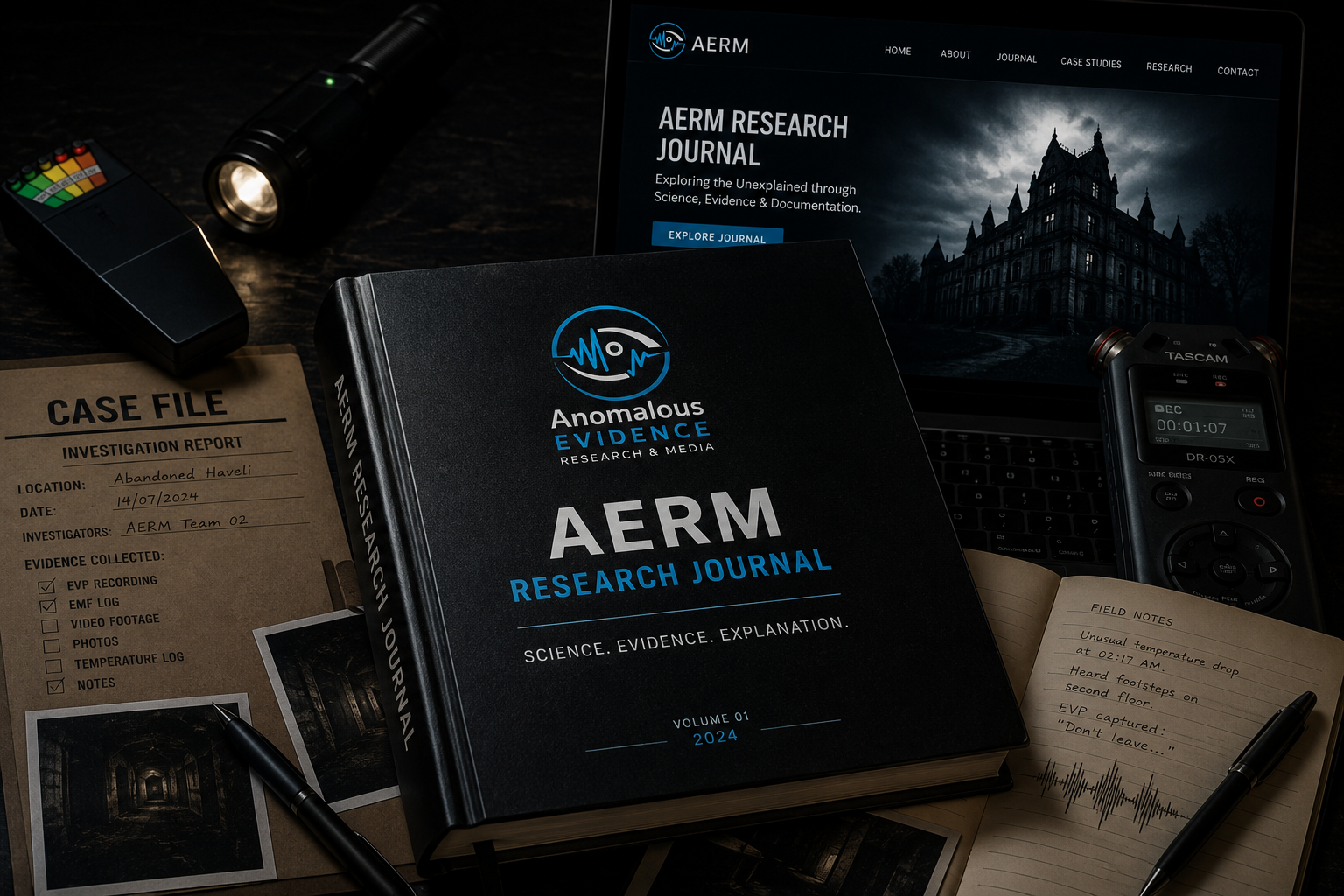
The Evolution of Investigation Instruments: From Pendulums to Digital Sensors
Tools used to investigate unusual claims have changed alongside science and technology. Early investigators relied on direct observation, notebooks, clocks, compasses and photography. Later generations adopted audio recorders, electromagnetic instruments, thermal cameras and digital sensors. The history of these tools is also a history of measurement: every new instrument creates new opportunities and new ways to be mistaken.
Early instruments. Mechanical clocks and compasses offered simple measurements, but their accuracy depended on construction, maintenance and environmental conditions. Photography added a record of visible scenes, while long exposure and early photographic processes introduced artefacts that could be misinterpreted.
Electrical and electronic measurement. The development of sensitive electrical instruments made it possible to measure fields and signals beyond direct human perception. These devices were designed for specific physical quantities. Their later use in paranormal-themed settings sometimes detached them from their original measurement purpose.
Audio recording. Magnetic tape and digital recording allowed repeated listening and waveform analysis. However, microphone characteristics, tape noise, automatic gain and digital compression shape what is captured. A recording is a mediated measurement, not a transparent window onto an event.
Digital era. Compact sensors, smartphones and networked devices make continuous logging accessible. But low cost can mean limited calibration, undocumented algorithms or proprietary processing. A sophisticated display may conceal a simple threshold detector.
Historical comparison exercise. Choose an old instrument and a modern equivalent. Compare the quantity measured, range, uncertainty, calibration procedure and data format. Ask whether the modern device genuinely improves measurement or merely makes the display more attractive.
Lessons for investigators. Preserve manuals and device settings. Understand the physical principle before interpreting a reading. Record instrument changes across a project. Do not compare data from different generations of equipment without accounting for differences.
Conclusion. The progress of investigation technology is not a straight path from primitive tools to truth. Each generation has strengths and limitations. Scientific value comes from understanding the instrument, not from its age or appearance.
References and Further Reading
- Brenni, P. The Evolution of the Scientific Instrument. relevant museum and history collections.
- NIST, historical and current resources on measurement science.
- Society for the History of Technology, resources on instruments and technological change.
AERM Research and Reporting Checklist
Before publication, confirm that the report:
- States the question and the observation separately from any interpretation.
- Identifies the location and conditions at a level that respects privacy and safety.
- Records equipment, settings, placement and known limitations.
- Preserves original files and documents any processing.
- Describes controls, alternative explanations and unsuccessful tests.
- Reports uncertainty and avoids claims stronger than the evidence.
- Has permission for all identifiable recordings, quotations and images.
AERM Core Principle: No anomaly is considered paranormal until environmental, psychological, technical, and scientific explanations have been systematically evaluated.
About AERM
Anomalous Evidence Research & Media (AERM) is a research and media initiative focused on structured investigation, evidence preservation and public science communication. Through its research publication work and the Paranormal Frame platform, AERM aims to make complex scientific ideas accessible while maintaining a clear distinction between observation, interpretation and established evidence.
Educational Disclaimer
This article is intended for education and research awareness. It is not a substitute for professional medical, engineering, electrical, legal, forensic or safety advice. Obtain appropriate permissions, follow applicable laws and standards, protect participant privacy, and consult qualified professionals whenever a task involves specialist risk.