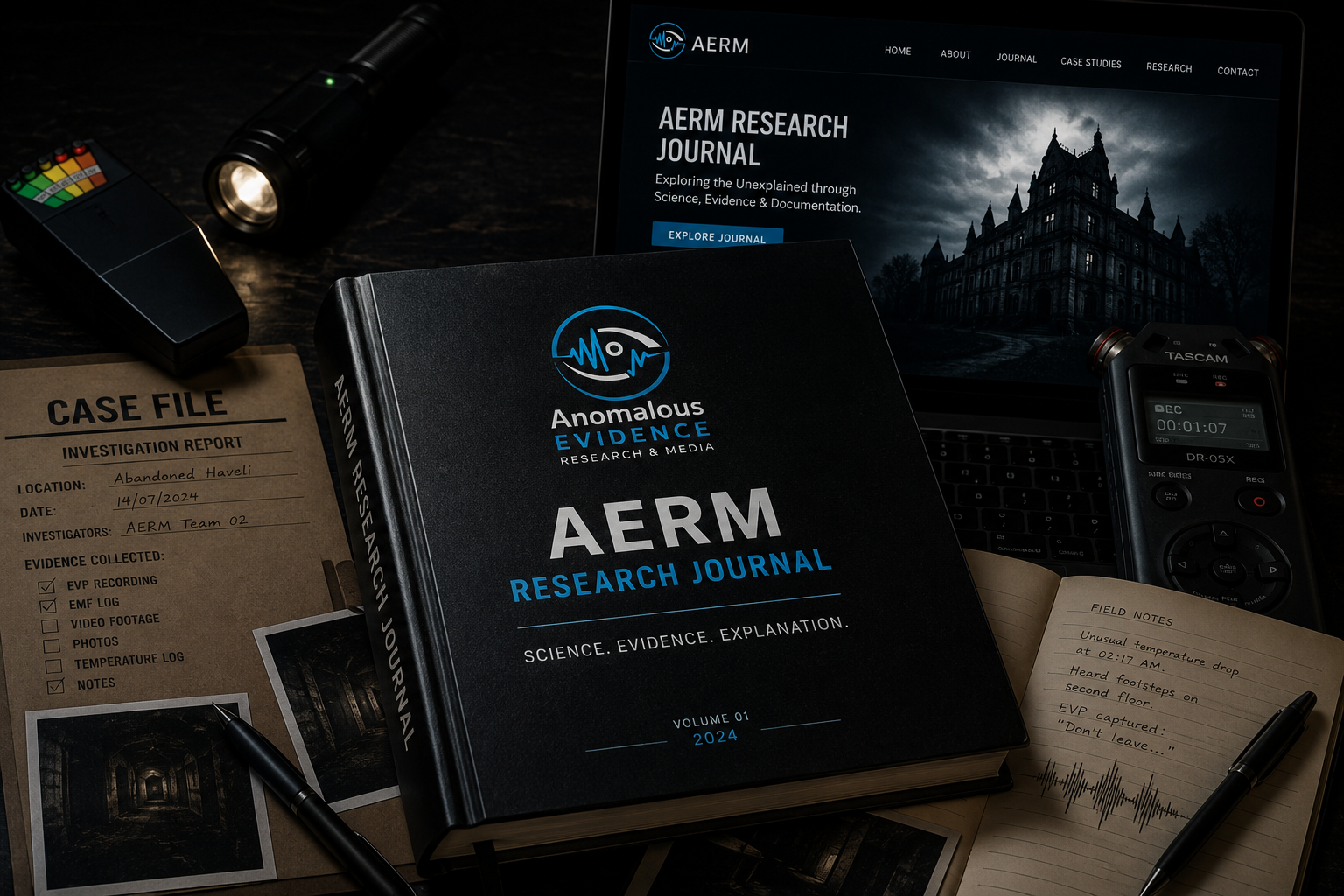
Field Safety in Paranormal Investigations: Risk Assessment and Professional Safety Guidelines
The greatest risk during an investigation is rarely the unexplained—it is the environment itself.
Field investigations often take place in unfamiliar environments, including abandoned buildings, forests, historical sites, industrial structures, and private properties. While these locations may contain reports of unusual activity, they frequently present genuine physical hazards that require careful planning and professional risk management.
At Anomalous Evidence Research & Media (AERM), investigator safety is considered a fundamental responsibility. Every investigation begins with a structured assessment of environmental risks before any evidence collection takes place.
No investigation is worth compromising personal safety
---
Executive Summary
Field safety involves:
- Risk assessment
- Site planning
- Emergency preparedness
- Proper equipment
- Team communication
- Environmental awareness
- Legal compliance
- Ethical responsibility.
A safe investigation is a professional investigation.
---
Why Field Safety Matters
Many investigation locations contain hazards unrelated to paranormal claims.
These may include:
- Structural instability
- Poor lighting
- Uneven flooring
- Sharp debris
- Exposed electrical wiring
- Wildlife
- Hazardous weather
- Chemical contamination
Ignoring these hazards places investigators at unnecessary risk and may compromise the investigation itself.
---
Conducting a Risk Assessment
Before entering any location, investigators should perform a preliminary risk assessment.
Questions to consider include:
- Is the building structurally safe?
- Are there signs of fire damage?
- Is the site legally accessible?
- Are hazardous materials present?
- Is emergency access available?
- What weather conditions are expected?
- Is mobile communication available?
A documented risk assessment helps determine whether an investigation should proceed.
---
Never Investigate Alone
Solo investigations increase personal risk and reduce the ability to respond effectively during emergencies.
Whenever possible:
- Work in teams.
- Maintain visual or radio contact.
- Establish meeting points.
- Assign responsibilities.
- Monitor team members throughout the investigation.
Teamwork improves both safety and investigative efficiency.
---
Essential Personal Protective Equipment (PPE)
Professional investigators should carry appropriate safety equipment.
Recommended PPE includes:
- Safety boots with good grip
- Protective gloves
- Safety helmet (where required)
- High-visibility vest (when appropriate)
- Dust mask or respirator
- Eye protection
- Flashlight or headlamp
- First aid kit
Protective equipment should match the environment being investigated.
---
Environmental Hazards
Investigators should remain aware of environmental risks such as:
Structural Hazards
- Weak floors
- Broken stairs
- Unstable roofs
- Loose walls
- Falling debris
Electrical Hazards
- Exposed wiring
- Damaged electrical panels
- Wet electrical equipment
- Unknown power sources
Biological Hazards
- Mold
- Animal droppings
- Insects
- Snakes
- Bats
- Birds
Chemical Hazards
- Fuel residues
- Industrial chemicals
- Asbestos
- Cleaning agents
- Contaminated water
Understanding these hazards is essential before entering any location.
---
Weather Awareness
Outdoor investigations require continuous monitoring of weather conditions.
Investigators should consider:
- Heavy rainfall
- High winds
- Lightning
- Extreme heat
- Extreme cold
- Flood risk
Weather conditions can change rapidly and significantly affect both safety and evidence collection.
---
Communication Planning
Every investigation should include a communication plan.
Teams should establish:
- Emergency contacts
- Communication methods
- Check-in intervals
- Evacuation procedures
- Meeting locations
Reliable communication improves emergency response.
---
Emergency Preparedness
Every team member should know how to respond if an emergency occurs.
Preparation includes:
- First aid knowledge
- Emergency exit routes
- Local emergency numbers
- Hospital locations
- Vehicle access
- Backup lighting
- Emergency supplies
Preparation reduces confusion during unexpected situations.
---
Equipment Safety
Investigation equipment should be inspected before every deployment.
Check:
- Battery condition
- Charging status
- Cable integrity
- Sensor operation
- Camera function
- Storage media
Faulty equipment can create unnecessary risks and affect evidence quality.
---
Respecting Legal Boundaries
Professional investigations should always comply with applicable laws.
Investigators should:
- Obtain permission before entering private property.
- Respect restricted areas.
- Follow local regulations.
- Avoid trespassing.
- Preserve the condition of the location.
Responsible conduct protects both investigators and property owners.
---
Respecting the Investigation Site
Every location deserves professional treatment.
Investigators should:
- Leave the site as it was found.
- Avoid unnecessary disturbance.
- Protect historical structures.
- Minimize environmental impact.
- Dispose of waste responsibly.
Good investigators protect the environments they study.
---
Personal Well-Being
Long investigations can be physically demanding.
Investigators should remember to:
- Stay hydrated.
- Eat regularly.
- Dress appropriately.
- Get adequate rest.
- Monitor fatigue.
- Recognize signs of heat exhaustion or dehydration.
Good physical condition supports better decision-making.
---
Common Safety Mistakes
Avoid these common errors:
- Entering unsafe structures.
- Ignoring weather warnings.
- Investigating alone.
- Carrying inadequate lighting.
- Wearing unsuitable footwear.
- Ignoring emergency planning.
- Taking unnecessary risks for photographs or videos.
- Allowing curiosity to override safety.
Professional judgment should always outweigh curiosity.
---
AERM's Safety Philosophy
Safety is integrated into every stage of an investigation.
AERM encourages investigators to:
- Plan carefully.
- Assess risks objectively.
- Protect themselves and others.
- Respect property and communities.
- Suspend investigations whenever conditions become unsafe.
No observation or piece of evidence justifies unnecessary danger.
---
Conclusion
Field safety is not an optional part of investigation—it is the foundation upon which every successful investigation is built.
Professional investigators understand that responsible research begins with protecting people, respecting locations, and managing risks through preparation and disciplined decision-making.
At AERM, we believe that careful planning, environmental awareness, and teamwork allow investigators to conduct meaningful research while maintaining the highest standards of safety and professionalism.
Evidence can always be collected another day. Your safety cannot be replaced.
---
Field Safety Checklist
Before every investigation, confirm that:
- □ Permission has been obtained.
- □ Risk assessment is complete.
- □ Weather has been checked.
- □ Emergency contacts are available.
- □ Communication devices are working.
- □ First aid kit is packed.
- □ Batteries are fully charged.
- □ Personal protective equipment is available.
- □ Investigation team has been briefed.
- □ Emergency exit routes are identified.
---
About AERM
Anomalous Evidence Research & Media (AERM) is an independent research organization dedicated to investigating unexplained reports through scientific methodology, environmental analysis, critical evaluation, and transparent documentation. Investigator safety, ethical conduct, and responsible research remain central to every field operation.
---
Disclaimer
This article is intended for educational purposes and provides general field safety guidance for investigators. It is not a substitute for professional safety training, emergency response instruction, or compliance with local laws and regulations. AERM encourages all investigators to prioritize safety, obtain appropriate permissions, and discontinue any investigation if conditions become unsafe.